
Lake Baringo | Rift Valley Kenya
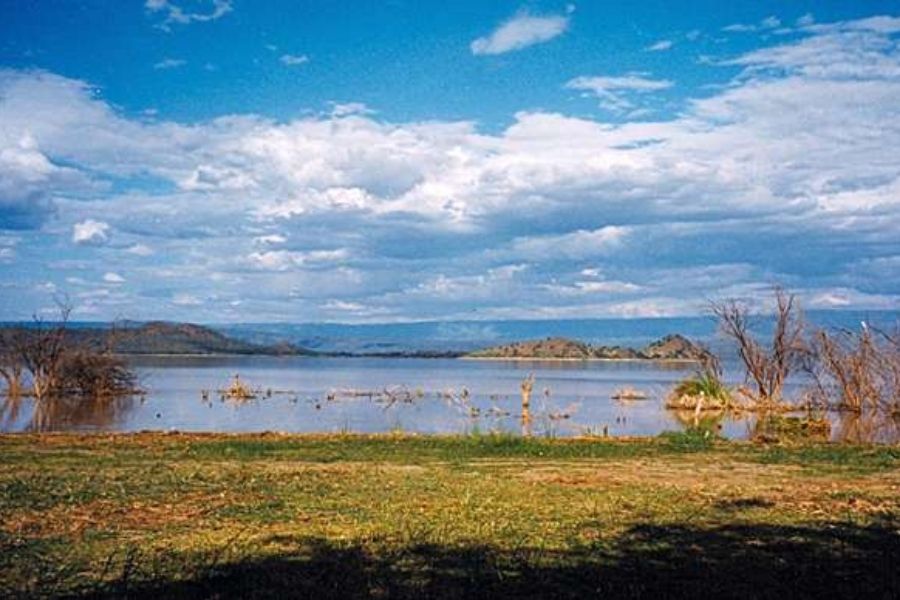
Lake Baringo is a fascinating place for geologists and nature lovers' alike, with outlandish landscapes and prolific birdlife.
One of the only two freshwater lake (the other is Lake Naivasha), it has no visible outlet, with its waters seep into lavas at its northern end, where a rocky shore contrasts with the alluvial flat on its southern border.
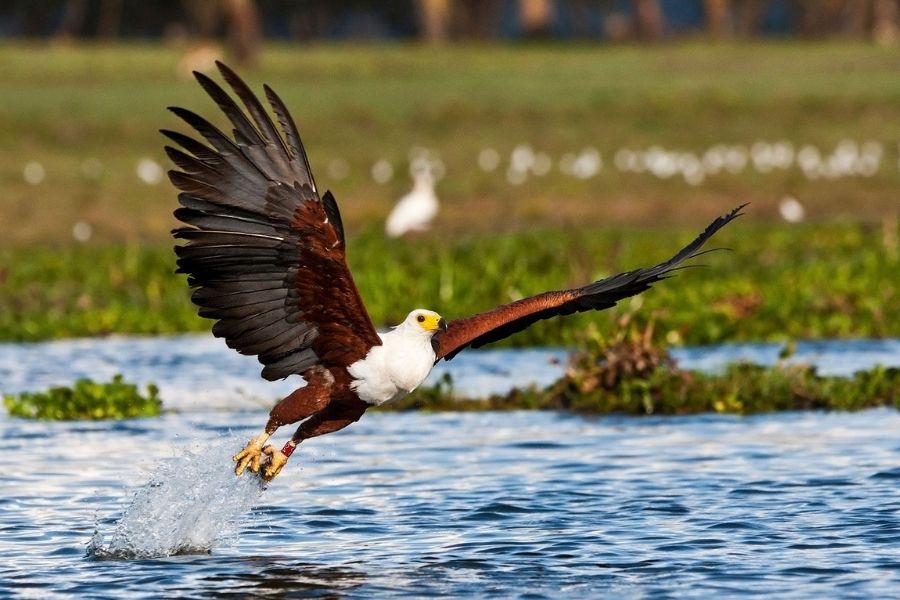
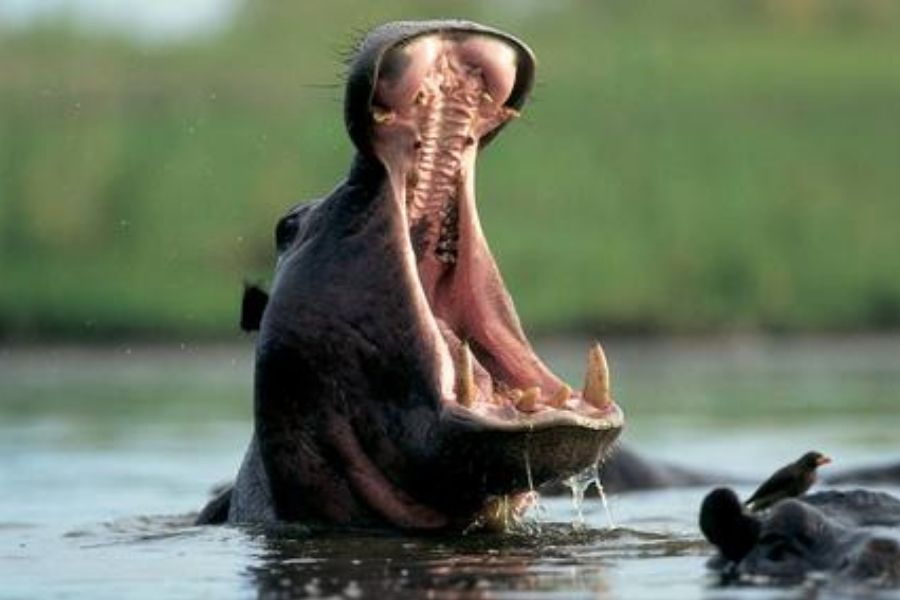
A great variety of birds inhabit the lake, which is also home to hippopotamuses and crocodiles.
The Kamasya and Njamus (Njemps) peoples of the Baringo basin catch species of tilapia (a perchlike fish) in the lake, herd cattle, and raise crops. Lake Baringo provides irrigation and drinking water and is also home to Nile crocodiles.
Wildlife of Lake Baringo.
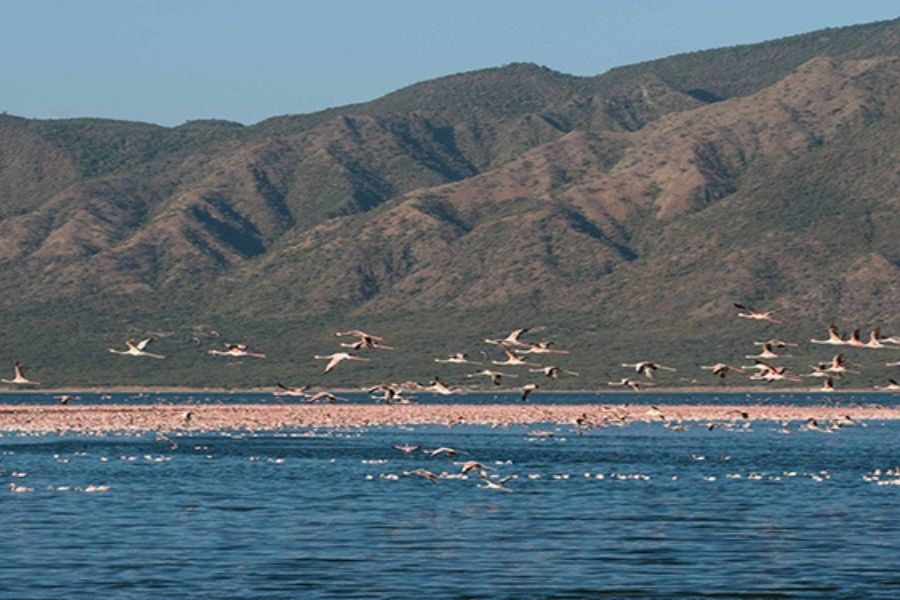
Many of the Kenyan Rift Valley lakes are known for their birdlife, and in particular the concentrations of Flamingoes, but because of Baringo's freshwater properties Flamingoes tend to stay away.
Nonetheless, the lake is home to more than 470 species of birds, many of which breed on and around the lake. Many migratory birds - both inter-Africa and globally considers the lake as an important stop for due to the several fish species which are as well fished by people living in the habitat.
The area is also home to a number of species such as Hippo, Crocodile, Zebra, Klipspringer, Grant's gazelle, Chandler's Mountain Reedbuck, and the rare Greater Kudu.
Lake Baringo Geology
Lake Baringo has several islands such as Ol Kokwe Island which has hot springs and fumaroles, some of which have precipitated Sulphur deposits. The area is also important for its archaeological and paleontological sites, where important hominid fossil discoveries have been made.
Visiting Lake Baringo
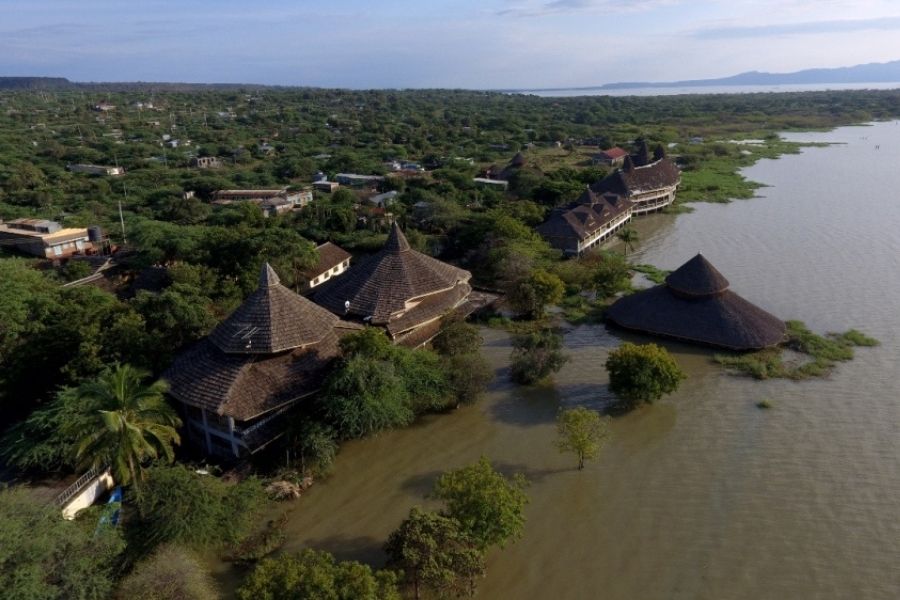
The area is becoming more popular as a tourist destination despite floods and unrest in the central west parts of Kenya.
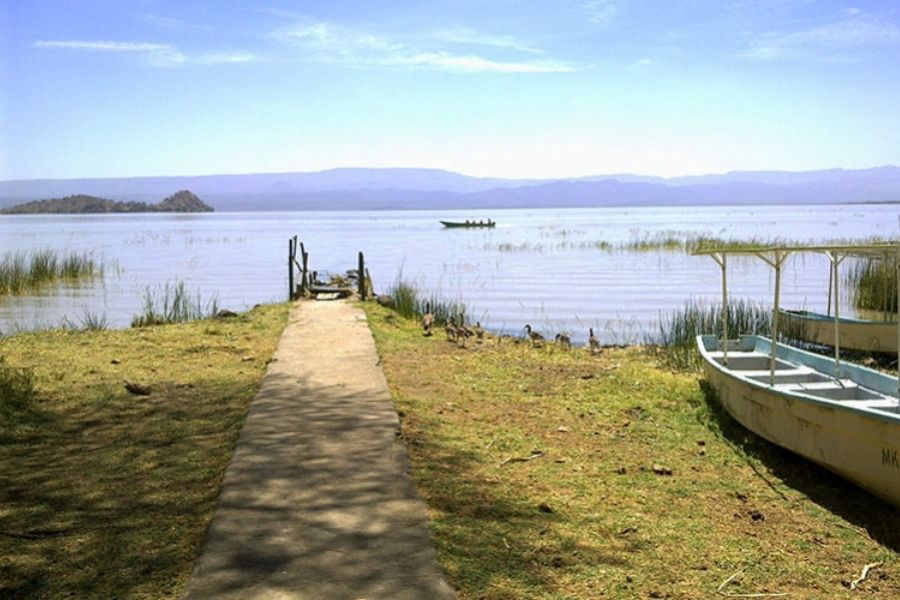
A range of accommodation is available in the region and boat hire is also easy.
Main road access to Lake Baringo is directly from Nakuru by private transport.
The nearest town to the lake is Kampi ya Samaki.